Home › Asphalt Sealcoating & Crack Filling
Protect your driveway with professional asphalt sealcoating in Detroit, MI that blocks water, sun, and salt damage. We clean and fill cracks, then apply a smooth, even sealer for a rich black finish. Regular maintenance saves money by extending the life of your residential asphalt.
Precision Asphalt Detroit provides professional asphalt sealcoating throughout Detroit, MI, Michigan and the surrounding area. Our licensed, insured crew delivers safe, clean, on-time work with a free estimate before anything begins. Call (313) 889-7046 or request your free quote.
Asphalt Sealcoating & Crack Filling in Detroit, MI
Detroit pavement takes a beating from freeze-thaw cycles, road salt, and heavy traffic. Precision Asphalt Detroit focuses on asphalt sealcoating and crack filling that are engineered for our local climate, not just a one-size-fits-all product. Our goal is to slow oxidation, stop water intrusion, and keep your driveway or parking lot looking sharp while extending its life.
We work with homeowners, property managers, facility directors, churches, and small businesses throughout Detroit, Dearborn, Southfield, Warren, and nearby communities. Every project starts with a site visit so we can see how your asphalt is draining, how it has weathered winter, and where the base may be failing. That local evaluation is what determines the right mix of cleaning, crack repair, patching, and sealcoating, rather than guessing from a square-foot price over the phone.
Our Local Process: From Cleaning To Final Cure
Successful sealcoating in Detroit depends on surface prep and timing. When Precision Asphalt Detroit arrives, the first step is mechanical cleaning. We use high-powered blowers, steel wire brooms, and in some cases pressure washers to remove dust, sand, loose aggregate, and vegetation from the surface and from within cracks. Oil spots are treated with an oil primer so sealer will bond instead of peeling.
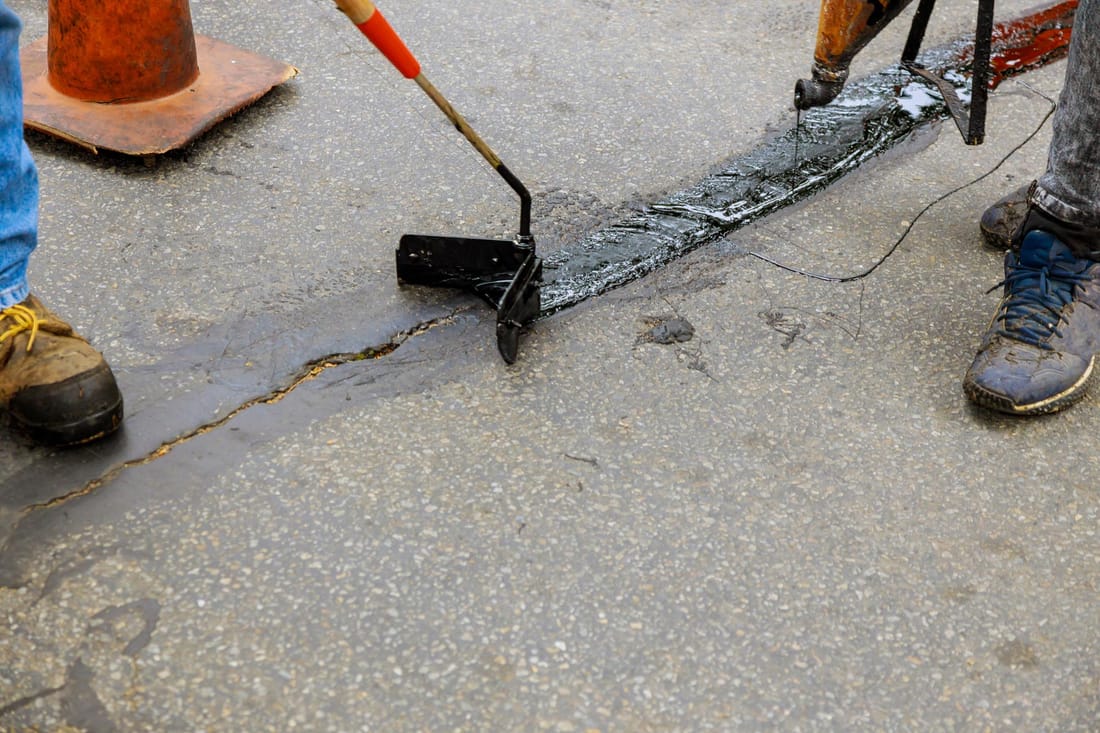
Once the surface is clean, we focus on crack filling and any small surface repairs. Only after the asphalt is structurally ready do we apply sealer. For residential driveways we typically use squeegees and brushes around edges for a neat, controlled line, then follow with spray application on the open areas if appropriate. Commercial lots are usually spray applied for consistent coverage and to reach tight areas around parking islands and curbs.
After sealcoating, we block off the area with cones or tape and provide clear instructions on reopening times. In typical Detroit summer conditions, light foot traffic is usually safe after 6 to 8 hours, while vehicle traffic should wait 24 hours or more depending on humidity, shade, and temperature.
Crack Filling: Materials, Techniques, And What They Fix
Ignoring cracks in Metro Detroit is what leads to potholes a year or two later. Water gets in, freezes, expands, and breaks apart the base underneath. Precision Asphalt Detroit uses different products depending on the type and width of crack.
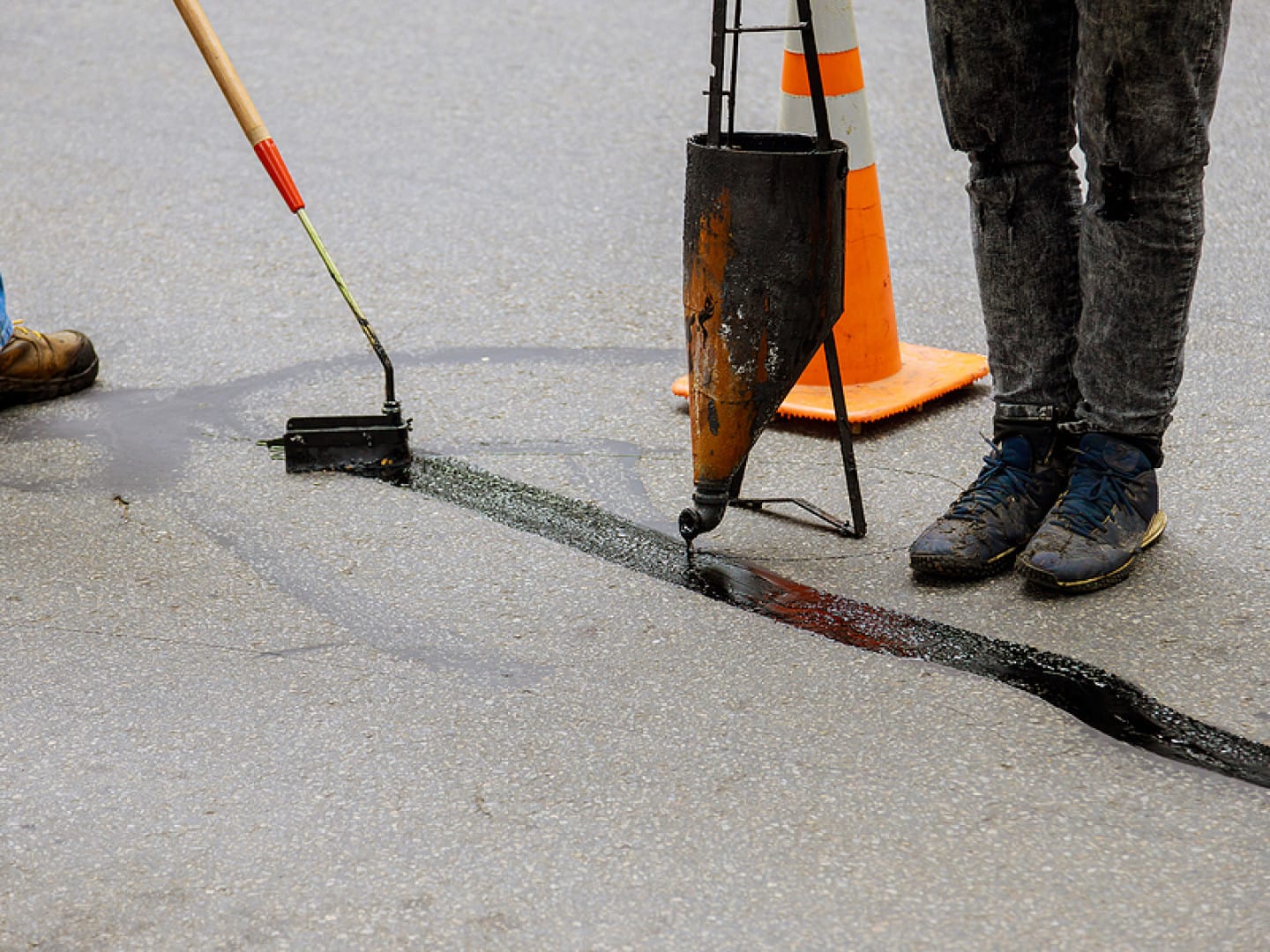
For active, wider cracks (roughly 1/4 inch to 1 inch) in commercial or heavier traffic areas, we typically recommend hot-pour rubberized crack sealant. We route or clean the crack, heat the material in a kettle, and then apply it so it bonds to the asphalt sides and remains flexible through temperature swings. This is especially helpful on larger parking lots near loading areas and drive lanes.
For smaller residential driveways or hairline cracking, we may use cold-pour crack fillers and specialized patching products, especially where budgets are tight. The key is getting the cracks cleaned properly and filled flush so they shed water. Where alligator cracking is present (many small interconnected cracks) we will usually suggest cut-and-patch or milling instead of crack filling, because those areas have base damage that filler and sealer cannot fix.
On every job we identify which cracks can be successfully sealed, which areas need patching, and which sections are beyond maintenance and should be considered for future resurfacing. We explain that on site so you know what to expect from the repairs.
Sealcoat Options And How We Match Them To Your Property
Not every sealer performs the same way on every surface. Precision Asphalt Detroit selects products and application rates based on how your pavement is used. A quiet residential driveway in northwest Detroit does not need the same treatment as a busy convenience store near a main corridor.
We primarily use refined tar and asphalt emulsion sealers that meet or exceed Michigan specifications. Where there are environmental or sensitivity concerns, we recommend high solids asphalt emulsion products. We adjust the sand load (the amount of fine aggregate mixed into the sealer) to improve traction and wear resistance. Heavier traffic lanes and turning areas get more sand to resist scuffing and wheel paths, while low-traffic areas can use a lighter mix for a smoother finish.
Most surfaces receive two coats of sealer, applied in thin, even layers, with extra attention at transitions like apron areas at sidewalks and entry drives. For older, more porous pavements, we may recommend a primer or an additional light coat so the surface does not soak up the first application unevenly. All of this is discussed with you ahead of time so there are no surprises about appearance or performance.
Detroit Climate, Scheduling, And Ideal Timing
Our climate around Detroit and southeast Michigan drives when and how sealcoating should be done. We generally schedule asphalt sealcoating and crack filling from late April through early October, targeting days with surface temperatures around 50 degrees or higher and no rain in the forecast.
Spring jobs are great for properties that suffered through a tough winter with new cracks and surface raveling. We can clean off winter sand and salt, seal cracks before spring rains, and protect the surface before summer heat hits. Summer and early fall provide the most reliable curing conditions, especially during stretches of warm, dry weather.
We carefully plan commercial projects to minimize disruption. That might mean working in phases so half a parking lot stays open at all times, or scheduling work for evenings or weekends. In areas with early morning traffic, like schools or medical offices, we pay attention to shaded spots that cure more slowly and adjust closure times accordingly.
If you already know your event schedule or busy season, we can build your sealcoating plan around it. It is often better to schedule a month ahead so we can target an ideal weather window rather than rushing into marginal conditions.
What Affects Cost And How We Help You Budget
Two properties in Detroit with the same square footage can have very different costs because asphalt condition, layout, and prep needs vary. Precision Asphalt Detroit walks you through the factors that matter so you can understand the proposal line by line.
Key drivers include how dirty or oxidized the surface is, how many linear feet of cracks must be cleaned and filled, how much edge work is required around curbs, concrete, and structures, and whether any potholes or birdbaths need patching before sealcoating. Tight lots with many islands, cart corrals, or obstacles take more time to prep and apply than a wide open area.
We separate out crack filling, patching, and striping in our estimates so you can see the value of each item. For larger commercial properties, we can create a multi-year maintenance plan that prioritizes high-traffic areas first, then works through secondary lots as budget allows. For homeowners, we are upfront about whether your driveway will benefit from sealing or if the pavement is too far gone and your money is better put toward resurfacing.
Because oil prices and material costs fluctuate, we keep proposals time-limited but always explain where costs are likely to change. That transparency helps property managers, condo associations, and small businesses budget realistically.
What To Expect When You Hire Precision Asphalt Detroit
We approach sealcoating and crack filling as long-term maintenance, not a quick cosmetic fix. Before work begins, we provide written instructions about moving vehicles, turning off sprinklers, and protecting nearby items like planters or outdoor furniture. On the day of service, our crew introduces themselves, walks the site with you, and confirms traffic control and phasing.
During the job, we manage traffic cones, caution tape, and signage so tenants, customers, and delivery drivers know where to go. If unexpected issues show up, such as hidden soft spots or severe alligator cracking under debris, we document them and discuss options before changing the scope.
After the sealer has cured and the lot is reopened, we can provide striping and pavement markings if requested, including ADA-compliant spaces, directional arrows, and loading zones. We also leave you with a simple maintenance guide: when to sweep, how to handle de-icing in winter, and when to schedule your next inspection. In Detroit, many properties see the best results with sealcoating every 2 to 3 years and crack sealing as new cracks appear.
When you are ready to protect your asphalt investment, contact Precision Asphalt Detroit for a site evaluation. We will look at the real condition of your pavement, explain which combination of asphalt sealcoating and crack filling makes sense, and put together a plan that works for your property and your schedule.