Home › Commercial Asphalt Resurfacing & Overlays
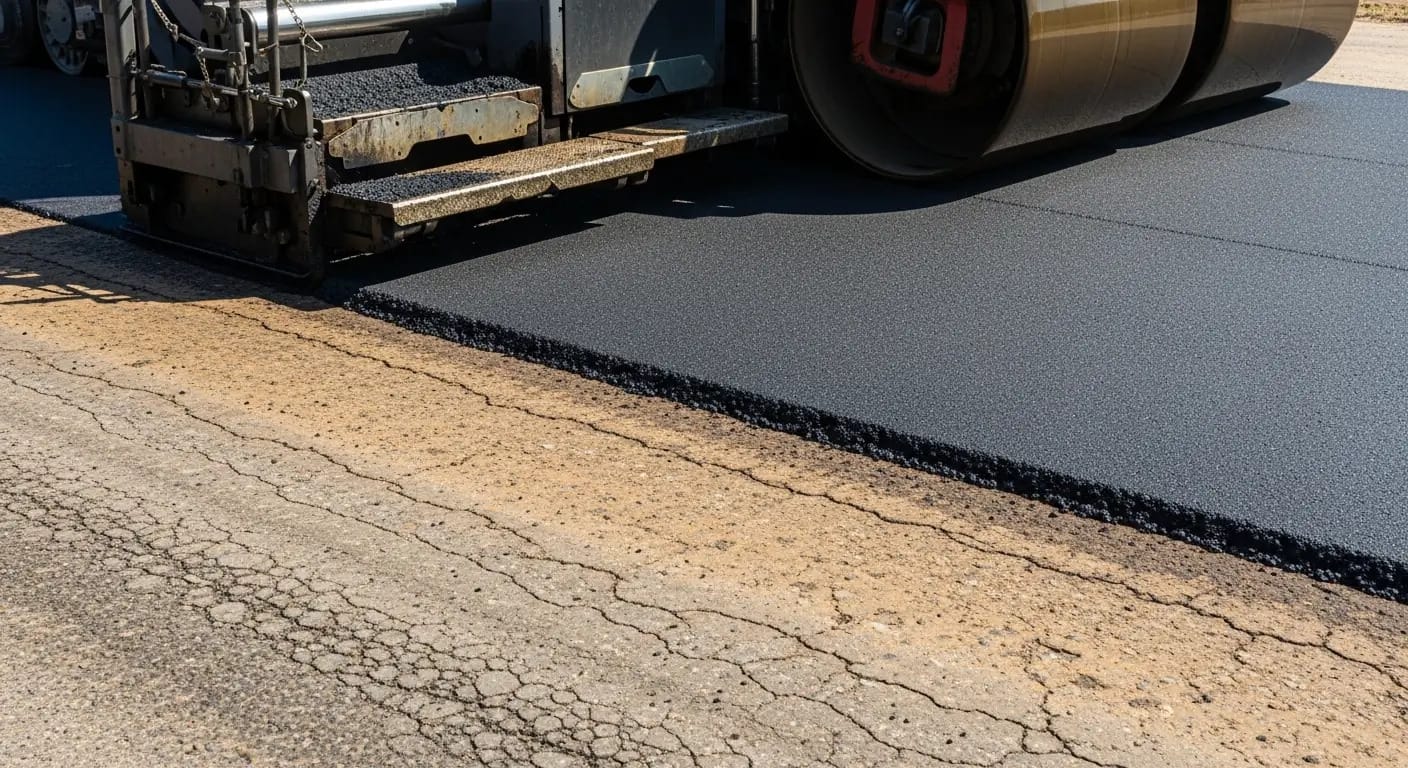
Revive tired parking lots and drive lanes with commercial asphalt resurfacing in Detroit, MI. We repair underlying damage, then install a new overlay that smooths ruts, cracks, and patchwork. This budget friendly option extends pavement life while giving your property a clean, like new appearance.
Precision Asphalt Detroit provides professional commercial asphalt resurfacing throughout Detroit, MI, Michigan and the surrounding area. Our licensed, insured crew delivers safe, clean, on-time work with a free estimate before anything begins. Call (313) 889-7046 or request your free quote.
Commercial Asphalt Resurfacing for Detroit Businesses
Commercial asphalt resurfacing is often the most cost-effective way to make older parking lots and drive lanes look and perform like new without paying for a full tear-out. At Precision Asphalt Detroit, we focus specifically on commercial properties in Detroit and the surrounding metro, so our resurfacing and overlay methods are built around Michigan’s freeze-thaw cycles, heavy snow loads, and deicing salt use.
Typical clients include retail centers, churches, schools, small and large office parks, apartment and condo communities, warehouses, municipalities, and industrial yards. Many call us when they are seeing spider web cracking, puddles that do not drain, faded striping, or frequent pothole patching. Resurfacing or an overlay is often the sweet spot when the base is still structurally sound but the top layer is rough, cracked, or worn.
Our goal is to give you a dependable surface that keeps traffic moving safely, looks clean for tenants and customers, and stands up to Michigan winters. We walk the site with you, talk through how your property works during the week and on weekends, and then phase the work so your business can stay open while we resurface.
When Resurfacing or an Overlay Is the Right Choice
Not every commercial asphalt lot in Detroit is a good candidate for resurfacing, and a contractor who tells you that it always is may not be giving you the full picture. At Precision Asphalt Detroit, we start with a full condition assessment.
Resurfacing or overlays are usually appropriate when: cracking is mostly surface level and not deep alligator cracking across large areas, the pavement has some patching but the base has not been pumping water or shifting badly, the surface is rutted where vehicles stop or turn but the subgrade is still firm, and drainage is mostly correct or can be corrected with milling in key areas.
We will recommend full-depth reconstruction instead of resurfacing if you have widespread base failure, constant standing water in many areas, or major heaving from frost that has broken the structure of the lot. Many Detroit properties, especially 15 to 25 year old shopping centers and apartment complexes, fall in the middle. They usually benefit from a combination of partial-depth repair, milling, and then a new overlay to get another 10 to 15 years of service at a lower cost than total replacement.
Our Step-by-Step Commercial Asphalt Resurfacing Process
Every resurfacing project follows a structured process so you know what will happen and when. For a typical commercial lot in Detroit, Precision Asphalt Detroit uses the following steps:
1. Detailed evaluation and coring if needed. We walk the lot, map out all distressed areas, check drainage patterns after rainfall when possible, and may take pavement cores or test pits on larger sites to verify base thickness and condition.
2. Planning, phasing, and traffic control. We meet with your property manager or facility team to plan work areas so tenants, customers, and deliveries can keep moving. This often includes doing work in halves or thirds, scheduling overnight or weekend paving, and setting up temporary traffic patterns and signage.
3. Cleaning and prep. We mechanically sweep, power blow, and brush the surface so the new asphalt can bond. Oil-soaked areas are treated or cut out. Loose patching or failed areas are milled or removed.
4. Milling and profile correction where required. We use cold milling to remove a specific thickness of old asphalt, especially around catch basins, curb lines, and entrances, to avoid creating trip edges. In some Detroit lots we mill deeper in rutting lanes and feather out the surrounding areas to reset the slope for better drainage.
5. Base and structural repairs. Soft spots are dug out, stabilized, and patched with new base and full-depth asphalt before any overlay goes down. Depressed areas around catch basins are reset so the new surface drains correctly.
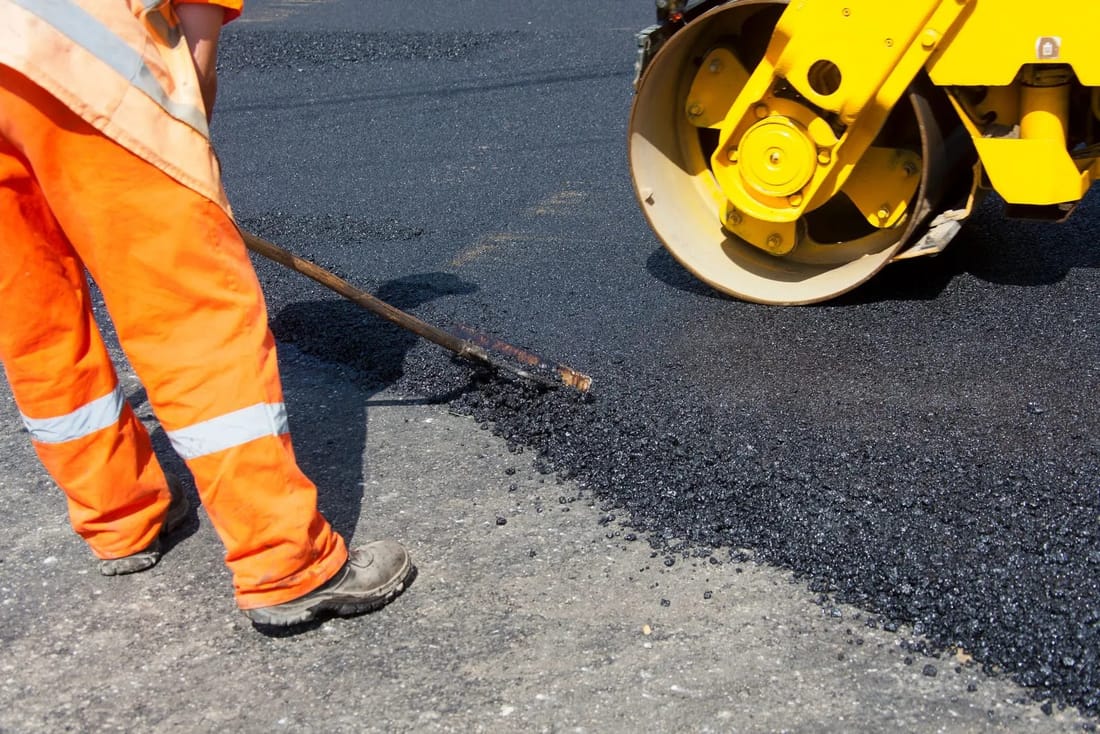
6. Overlay installation. A tack coat is applied to bond the old surface to the new asphalt. Then we place a new asphalt layer with commercial-grade pavers, not hand spread except in tight spots. Thickness typically ranges from 1.5 to 3 inches depending on use, traffic load, and existing structure.
7. Compaction, joints, and cleanup. Rollers compact the new mat to the specified density, with special attention to joints so they do not unravel later. We finish by cleaning the site, removing barricades as areas are ready to open, and then return for striping and any requested markings.
Material Options and Overlay Design Choices
Commercial asphalt resurfacing is not one-size-fits-all. Precision Asphalt Detroit adjusts mix design and overlay thickness based on how your pavement is actually used.
For shopping centers, churches, and offices with mostly car traffic, we often recommend a 1.5 to 2 inch surface course using a dense-graded Michigan DOT style mix that balances smoothness and durability. For industrial drives, warehouse loading areas, or bus traffic, we lean toward thicker overlays with heavier-duty binder courses under the surface lift, sometimes 3 inches or more total and with a coarser aggregate for rut resistance.
On older Detroit lots that have been overlaid before, we take care not to keep building too much thickness at curb lines. We may mill more aggressively along curbs and sidewalks while leaving more structure in drive lanes. We can also include fabric or grid reinforcement between layers in specific areas that tend to crack, such as joints over utility trenches or at transition points between old and newer pavement.
If your site has chronic drainage issues, we may propose wedge milling and a variable-depth overlay to reshape the surface, rather than a uniform depth everywhere. These design decisions are laid out for you in writing so you know why a certain thickness or mix is being recommended for your Detroit property.
What Drives the Cost of Commercial Asphalt Resurfacing
Property managers in Detroit often ask why resurfacing quotes vary so widely. The price is not just about square footage. Precision Asphalt Detroit explains the cost drivers on every proposal so you can compare bids fairly.
Key factors include: total area and layout complexity (lots with many islands, tight corners, or multiple buildings require more handwork and joints), thickness of the new overlay and how much milling or profile correction is required, amount of base repair or full-depth patching needed before resurfacing, access issues such as limited staging space, steep grades, or the need for more traffic control and off-hours work, and whether additional items like catch basin rebuilding, curb repairs, or ADA upgrades are included.
Seasonal timing in Michigan also affects cost and scheduling. Spring and fall often book quickly. Summer night work for high-traffic sites can carry a premium because of lights, staffing, and coordination. Salt damage and freeze-thaw cracking from harsh winters may increase the amount of pre-overlay repair needed, which we will clearly itemize so you see the line between resurfacing itself and underlying fixes.
We encourage Detroit clients to ask for unit prices on milling, base patching, and overlays in our proposals. That way, if the actual field conditions differ slightly from the estimate, you can see how any additions or reductions are calculated.
Common Problems We Solve on Detroit Commercial Lots
Local conditions in Detroit create predictable issues that we design our resurfacing work to handle. Our crews at Precision Asphalt Detroit see the same patterns on many commercial properties.
Freeze-thaw cycles create reflective cracking and joint openings, especially where older patches meet original pavement. We often mill and bridge these transition areas with fabric or thicker overlay sections. Salt use around storefronts and walkways can accelerate surface raveling and potholes, so we may use a slightly richer surface mix near entrances for improved durability.
Long drive lanes leading to industrial facilities or warehouses often show rutting from repeated truck paths. Before overlaying, we typically profile mill and strengthen those wheel paths with a deeper structural course so the new surface does not rut again quickly. Around catch basins, we frequently find sunken rings or broken concrete structures. These are rebuilt or adjusted before the overlay so the new surface stays tight to structures and does not pond water.
We also watch for inadequate ADA slopes near accessible parking and routes to entrances. When resurfacing, we can often correct these with careful milling and overlay thickness adjustments rather than full reconstruction, which helps property owners stay compliant without blowing the budget.
What Detroit Property Owners Should Know Before Hiring
Choosing a contractor for commercial asphalt resurfacing is not just about the lowest number on a quote. Precision Asphalt Detroit encourages property managers, facility directors, and owners to ask specific questions so you get lasting value.
Ask how the contractor will verify that your lot is a good candidate for resurfacing instead of full replacement and what they will do if they uncover unexpected base failures. Request a clear phasing and access plan that explains how tenants and customers will be routed while work is going on. Confirm what mix design, overlay thickness, and compaction standards will be used, and make sure these are written into the proposal, not just discussed verbally.
It is also smart to ask who will be on-site managing your project. Our jobs are overseen by a local foreman or superintendent familiar with Detroit traffic patterns, weather, and local inspection requirements. We provide you with a single point of contact during the job.
Finally, discuss maintenance expectations after resurfacing. We provide guidance on when to restripe, when sealcoating makes sense for your specific lot, and how to manage snowplow operators so they do not damage joints or curbs. A good resurfacing job should be part of a long-term pavement plan for your property, not a one-time quick fix.