Home › Commercial Gravel-to-Asphalt Conversions
Upgrade rough gravel lots and drives with commercial gravel to asphalt conversions in Detroit, MI. We regrade and stabilize your base, then install asphalt surfaces that reduce dust, mud, and maintenance. Ideal for businesses, churches, and industrial sites needing cleaner, more professional access.
Precision Asphalt Detroit provides professional commercial gravel to asphalt throughout Detroit, MI, Michigan and the surrounding area. Our licensed, insured crew delivers safe, clean, on-time work with a free estimate before anything begins. Call (313) 889-7046 or request your free quote.
Turn Your Gravel Lot Into a Professional Asphalt Surface
If you are tired of dust clouds in summer, ruts after every rain, and plow trucks scraping up your gravel every Detroit winter, converting to asphalt is usually the smarter long‑term move. Precision Asphalt Detroit specializes in commercial gravel to asphalt conversions for plazas, industrial yards, churches, medical offices, and multi‑tenant properties across the Detroit metro area.
A proper conversion is more than just paving over gravel. The existing stone base has to be evaluated, shaped, and sometimes rebuilt so it can carry the load of delivery trucks, garbage trucks, and customer traffic without premature cracking. Our crews look at how water currently drains across your lot, where ice sheets tend to form, and which areas stay soft after a thaw. By correcting those issues before paving, we help your new asphalt surface last far beyond the typical 15 to 20 year expectation.
Commercial property owners in Detroit also care about first impressions. A clean, striped asphalt lot looks safer and more professional, which can support higher occupancy and better tenant satisfaction. With a thoughtful layout, we often gain a few extra parking spaces compared to the old gravel layout simply by organizing the flow and striping clearly.
How a Commercial Gravel to Asphalt Conversion Actually Works
Our process is structured so your business stays as accessible as possible while we work.
1) Site walk and drainage review: We walk the whole gravel lot with you, note heavy traffic paths for semis or delivery trucks, and identify low spots, soft areas, and any drainage problems. In older Detroit lots, we often find informal gravel patches over old broken concrete, which affects how we prepare the base.
2) Base testing and grading: We proof‑roll the lot with loaded equipment to see where the stone base deflects. Soft spots are excavated and rebuilt with compacted aggregate. We then grade the surface to create a consistent slope toward existing catch basins or new drain structures, usually targeting a 1 to 2 percent pitch so water does not sit and refreeze in winter.
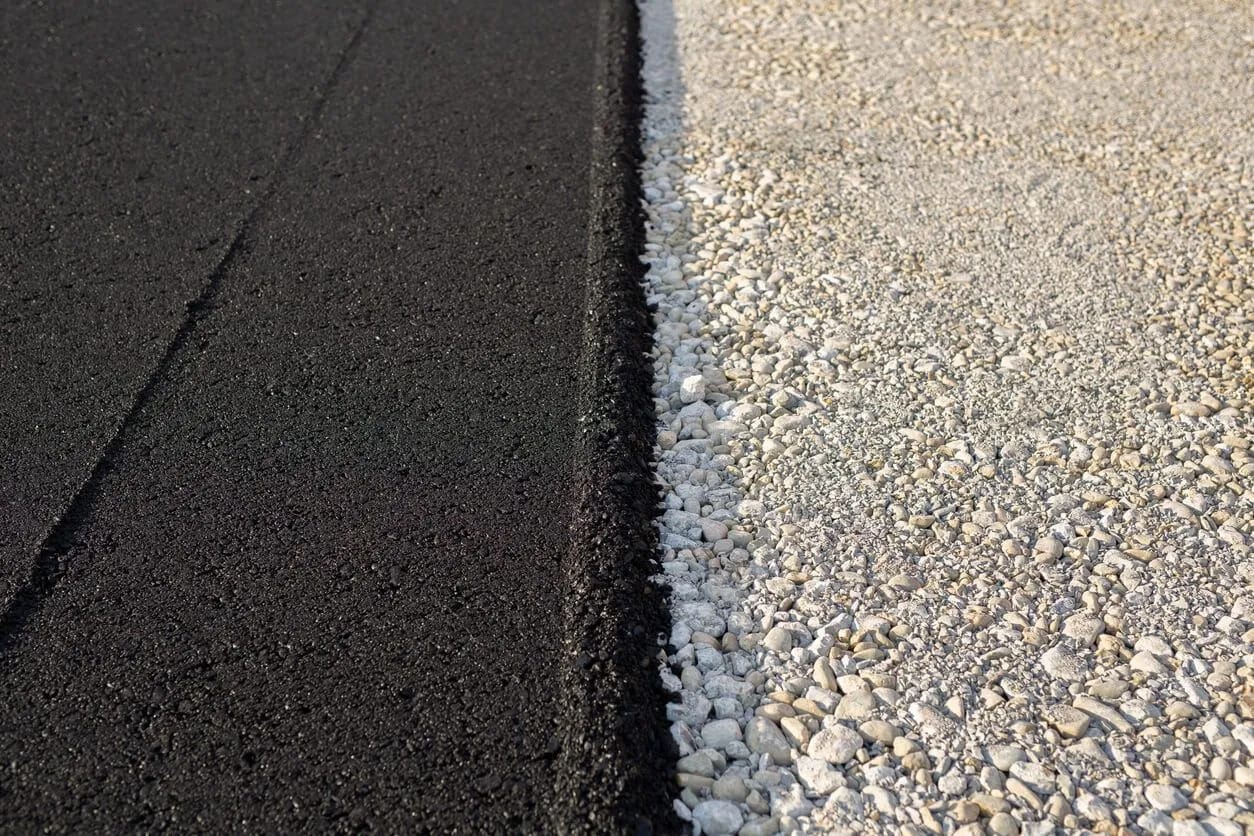
3) Edge containment and transitions: Commercial gravel lots usually have undefined edges that wander over time. Before paving, we establish firm edges using concrete curbs, asphalt curb, or clean saw‑cut tie‑ins to existing drives and alleys. This keeps the new asphalt from unraveling at the sides. At driveway entrances, we design smooth transitions so low‑clearance cars and loaded forklifts can enter without bottoming out.
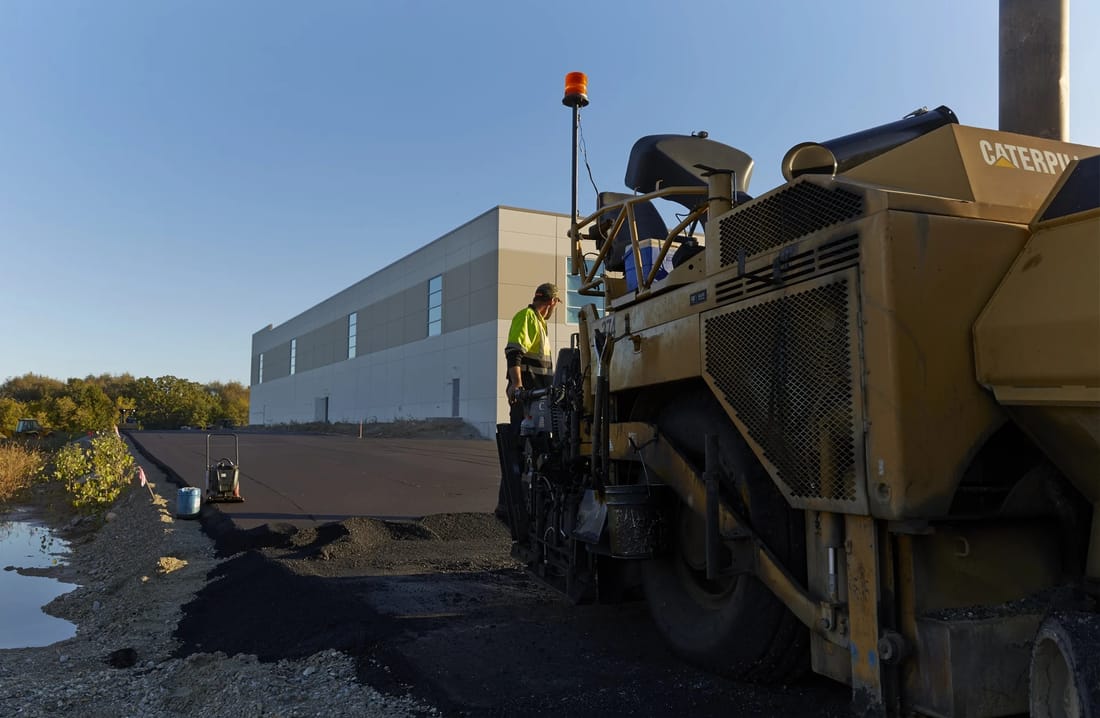
4) Asphalt installation: For typical commercial traffic, we install a binder course and a surface course, not just a thin layer of asphalt. A common section in Detroit is 2 to 3 inches of binder asphalt topped with 1.5 inches of surface mix, compacted with steel drum and pneumatic rollers. High‑truck areas such as dumpster pads or loading lanes may get a thicker section or a heavier mix design.
5) Striping and safety markings: Once the asphalt cools, we add parking stall striping, ADA compliant spaces and access aisles, stop bars, crosswalks, and directional arrows. We coordinate with you on fire lane markings and signage so the new layout stays compliant with Detroit and Michigan codes.
6) Final walkthrough and maintenance plan: We walk the lot with you to confirm drainage, layout, and access points. Then we explain when to schedule your first sealcoat, what de‑icing products are safest on new pavement, and how to handle snow plowing so blades do not gouge fresh asphalt.
Cost Drivers and Budgeting for a Detroit Gravel to Asphalt Project
Commercial gravel to asphalt costs can vary widely, and understanding why helps you plan realistically.
Base condition: If your existing gravel is deep, well compacted, and drains correctly, we can reuse most of it, which keeps costs controlled. If we find saturated clay pockets, shallow stone, or a “mushy” base that pumps under the roller, those sections must be undercut and rebuilt with new aggregate. Detroit properties near older industrial sites often have mixed fill, which sometimes requires more prep.
Thickness and mix design: Lots that only see cars can use a lighter asphalt section than lots that handle box trucks or semi traffic. Heavier sections cost more initially but prevent rutting and alligator cracking within a few winters. We look at your actual use pattern and recommend a pavement structure that balances budget with realistic performance.
Drainage improvements: Installing or adjusting catch basins, running new drain lines, or adding swales is a cost driver, but it is crucial in Michigan’s freeze‑thaw climate. Standing water that freezes, expands, and thaws repeatedly is one of the fastest ways to destroy new pavement. Sometimes a simple regrade and a few well placed inlets can eliminate chronic puddles.
Access and phasing: Working around active businesses, apartment complexes, or medical facilities can add cost because we may pave in phases, control traffic, and work off‑hours to keep you open. Precision Asphalt Detroit will outline phased options so tenants and customers always have a way in and out.
Permits and compliance: The City of Detroit and nearby municipalities may require site plans or permits when you change a gravel lot to a hard surface because runoff patterns change. We coordinate with you and your design professional, or bring in one of our partners, so the project meets stormwater and zoning requirements and you are not surprised later.
Common Problems We Solve During Conversions
Older gravel lots often hide issues that only show up once you start converting. Our crews have seen most of them on Detroit jobs and know how to address them without derailing your schedule.
Poor or flat drainage: Many gravel lots were never engineered. If water currently sits near building entrances or along property lines, simply paving over that surface will make the problem worse. Before we bring in asphalt, we adjust grades, add positive slope, and, where needed, install additional drains or French drains to carry water away from buildings and neighboring properties.
Soft spots and buried debris: It is common to uncover buried rubble, old cinder blocks, or random fill under gravel. If those areas are not removed and rebuilt, they will settle and create depressions in the new asphalt. We identify these voids during proof‑rolling, dig them out, and replace them with compacted aggregate base.
Tie‑ins to existing structures: Commercial properties often have loading docks, warehouse thresholds, or existing concrete pads that must match the new asphalt elevation exactly so dock plates sit correctly and water does not run into the building. We carefully set grades and use laser levels around doorways, overhead doors, and ramps to avoid awkward steps or tripping hazards.
Winter timing and traffic: In Southeast Michigan, paving season typically runs from April through early November, depending on weather. If a project must happen late in the year, we plan staging so the asphalt has enough time to cool and gain strength before heavy snow equipment is used. We can also temporarily stabilize critical areas with compacted stone if weather closes in before final paving is possible.
Planning Your Project With Precision Asphalt Detroit
A successful commercial gravel to asphalt conversion starts with a clear plan that respects your business operations. During our initial meeting, we ask when your peak customer times occur, where delivery routes run, and which entrances must stay open at all times. With that information, we propose a phasing schedule that minimizes disruption and keeps your tenants or customers informed.
For many Detroit properties, especially multi‑tenant retail or office centers, we can pave one half of the lot while traffic uses the other half, then switch. In more complex sites, like active industrial yards or healthcare facilities, we may break the project into smaller segments and schedule work in evenings or weekends. Communication is key, so we provide simple maps you can share with tenants that show which areas will be closed on which days.
Before you decide on any contractor, ask for details on base preparation, pavement thickness, drainage approach, and how they will protect your building from water. A very low quote that skips base repair or proposes a single thin asphalt lift over questionable gravel is usually a red flag. Precision Asphalt Detroit welcomes these questions and will give you a written scope that spells out each layer and each step.
When you are ready to explore converting your gravel lot to asphalt, we can meet on site anywhere in Detroit or the surrounding suburbs, review your goals, and provide a detailed proposal that fits your use, budget, and schedule. The result is a clean, durable asphalt surface that looks professional, plows cleanly in winter, and handles Michigan’s climate for years to come.