Home › Parking Lot Repair & Replacement
Protect customers, tenants, and vehicles with expert parking lot repair in Detroit, MI. We patch potholes, fix failed sections, and when needed perform full asphalt replacement for long term performance. Keep your commercial property safe and professional looking with our tailored repair plans.
Precision Asphalt Detroit provides professional parking lot repair throughout Detroit, MI, Michigan and the surrounding area. Our licensed, insured crew delivers safe, clean, on-time work with a free estimate before anything begins. Call (313) 889-7046 or request your free quote.
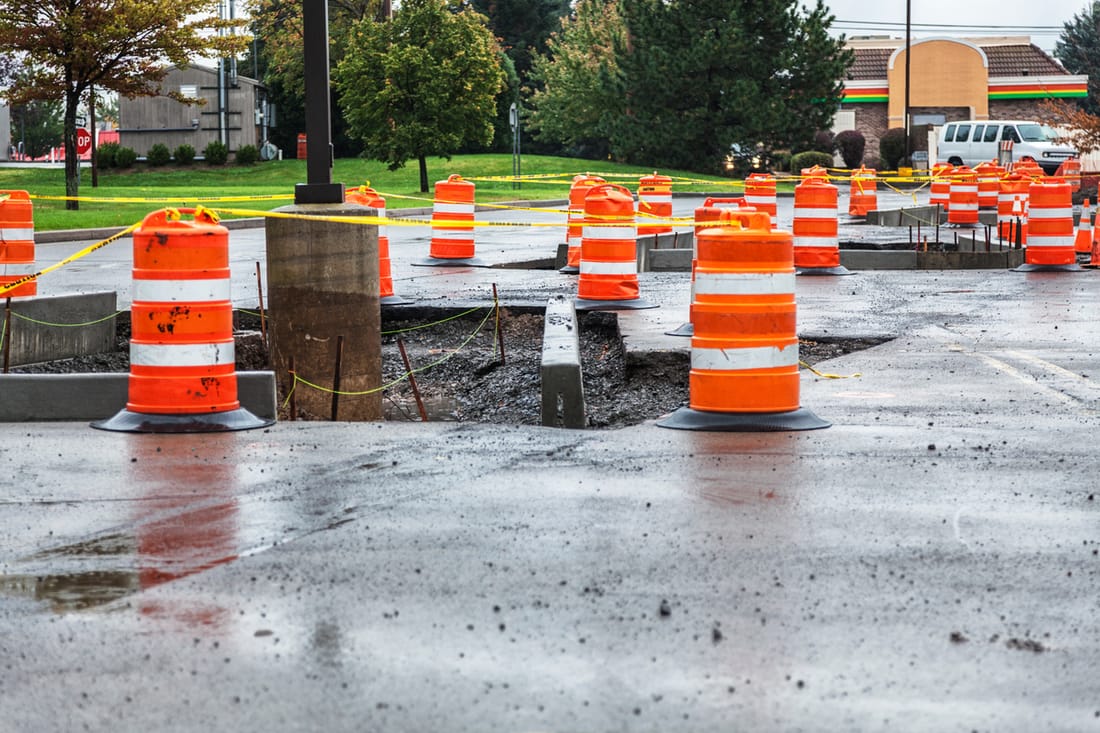
Practical parking lot repair for Detroit properties
If your parking lot is cracking, rutted, or collecting water, you do not need a sales pitch. You need honest feedback on what can be fixed and what needs to be torn out. At Precision Asphalt Detroit, we start every parking lot repair job with a walk‑through of the site, looking at how the pavement is actually being used. We note traffic patterns, heavy truck routes, dumpster pads, and where snow piles end up in winter, because those areas usually fail first in southeast Michigan.
Detroit’s freeze and thaw cycles are hard on asphalt. Water gets into small surface cracks, freezes, expands, and turns hairline cracks into potholes by spring. Our crews look for the source of damage, not just the symptom. A few potholes in random spots can usually be cut out and patched. Long, spreading alligator cracking usually points to a weak base or poor drainage and may require milling or full-depth replacement in that lane or section.
Before we recommend parking lot replacement, we check how thick the existing asphalt is and how the base is performing. We do this by cutting a couple of small cores or test pits, then visually checking the layers. This lets us tell you if a 2 inch overlay will last or if it would just be a temporary bandage. Our goal is to match the fix to the real problem, so you are not paying for work you do not need or repeating the same repair again in two years.
How we repair potholes, cracks, and failed sections
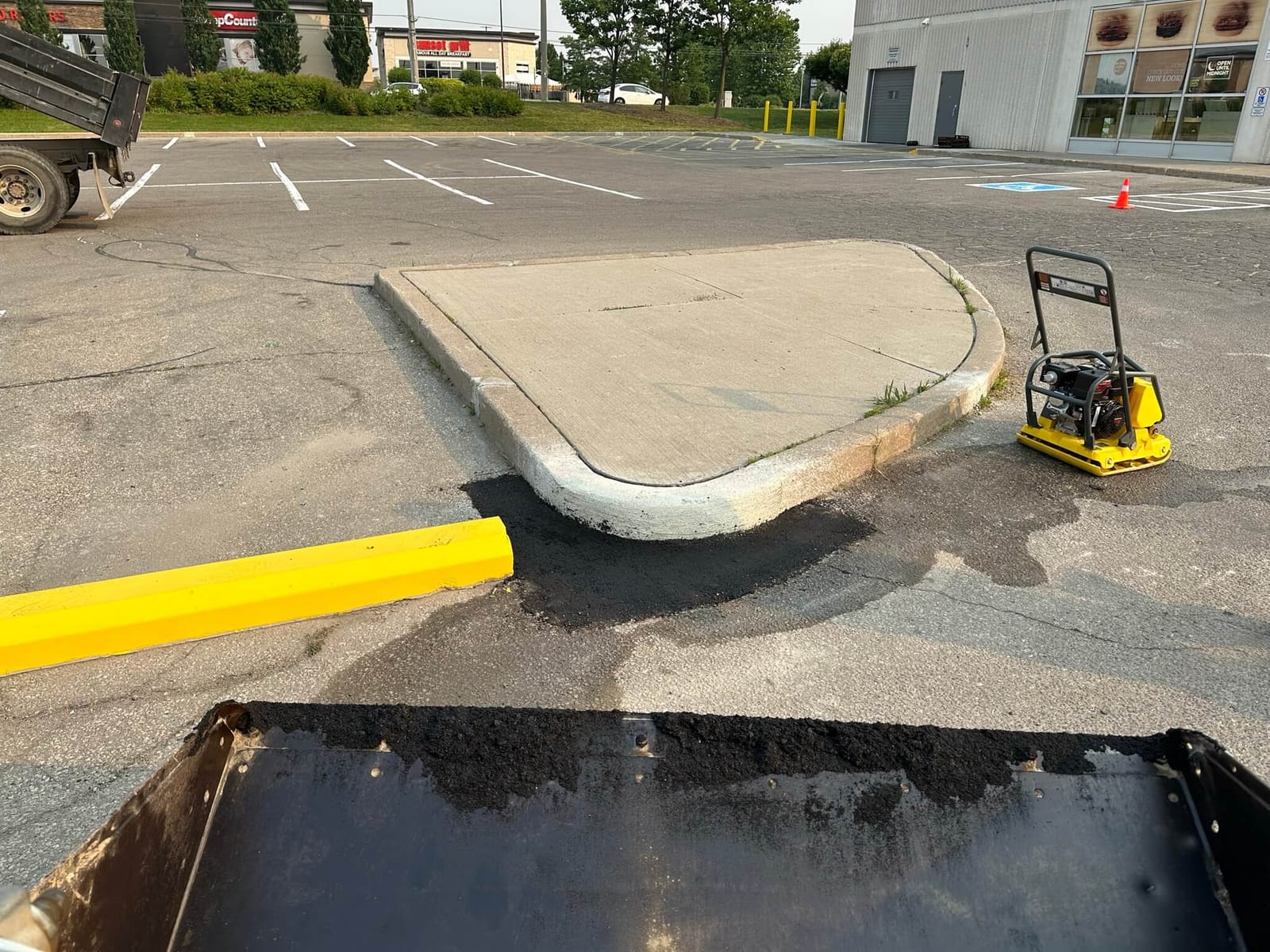
Good parking lot repair is detailed work. We do not just drop in a shovel of asphalt and tamp it down. For pothole repair, we saw cut the area into a neat square or rectangle, remove all loose material, and check the base. If the stone base is soft or pumping water, we replace and compact that stone before any asphalt goes back in.
Once the base is solid, we apply a tack coat to the vertical edges so the new asphalt bonds to the existing pavement. Then we install hot mix asphalt in lifts, usually 2 to 3 inches at a time, and compact each lift with a vibratory plate or roller. This is what keeps patched areas from sinking or raveling out under traffic. For drive lanes that see delivery trucks, we may suggest a slightly thicker patch or a stronger mix to handle the weight.
For crack repair, we start with routing or cleaning to open the crack and remove dust and debris. This step matters in Detroit, because sand and winter deicing materials tend to sit in cracks and prevent sealant from bonding. After the cracks are clean and dry, we apply hot rubberized crack sealant, slightly overfilling and then smoothing it out. This keeps water from working under the pavement and slows down freeze-thaw damage. Wide cracks or joints near catch basins are often reinforced with a small strip patch, which is a narrow band of new asphalt placed over fabric to bridge the gap.
When an area shows block cracking or alligator cracking, we mark out the failed zone and perform a full-depth patch. That means cutting through the old asphalt down to the base, improving drainage if needed, then rebuilding the section to match or slightly exceed the original pavement thickness. This approach costs more than a quick skin patch, but in Michigan’s climate it typically lasts much longer.
Overlay vs. full parking lot replacement
Many Detroit property owners ask if they can simply resurface their parking lot instead of replacing it. Sometimes the answer is yes, and sometimes it is a bad idea. At Precision Asphalt Detroit, we look at three things before suggesting an overlay: the overall structure of the lot, drainage, and how much movement we see in the old surface.
If the base is solid, there are no major dips that hold water, and the existing asphalt is mostly sound with light to moderate cracking, a mill and overlay can be a good choice. We typically mill (grind) off the top 1 to 2 inches of asphalt, clean the surface, adjust manholes and catch basin rims, apply tack coat, and then pave a new surface course. This gives you a fresh wearing layer with new structure on top, often at a lower cost than full reconstruction.
Full replacement is usually the better investment if the lot has deep ruts, widespread alligator cracking, ongoing sinkholes near utility trenches, or chronic drainage problems. For full replacement, we remove the existing asphalt, inspect the stone base, and either regrade and reuse it or replace it with new aggregate compacted in lifts. In truck lanes, dumpster pads, or loading areas, we often increase the asphalt thickness or switch to a heavier duty mix to prevent future rutting.
Slope and drainage are a big part of this decision. If water is currently flowing back toward the building or pooling in traffic lanes, an overlay alone will not fix the problem. We may recommend regrading portions of the lot, installing new or additional catch basins, or adjusting the crown of drive lanes before the new pavement goes in. Spending money here protects your investment, because standing water destroys asphalt over time in our climate.
Planning work around Detroit weather and operations
Timing matters for parking lot repair and replacement in Detroit. Asphalt work needs temperatures generally above 45 degrees and dry conditions for the best compaction and bonding. In practical terms, that means our main paving season runs from roughly April through early November, with crack sealing and smaller repairs extending a bit on either side when conditions allow.
For businesses, churches, schools, and apartment complexes, shutting down the entire lot is usually not realistic. Precision Asphalt Detroit typically stages the project so you can keep part of the parking lot open at all times. We can phase work by sections, such as front customer parking first, then side or rear employee parking, or by drive lanes versus parking bays. We coordinate with your busiest times, deliveries, and scheduled events so disruption is minimal.
On repair jobs, most standard pothole and patching work is completed and reopened to traffic the same day, after proper cooling and compaction. Full replacements or major overlays might require limiting traffic overnight or for 24 hours, depending on thickness, weather, and traffic type. In hot summer stretches, we may start earlier in the morning to beat the heat and ensure the mat compacts correctly.
Winter is when weak spots show up. If you have emergency hazards like deep potholes that are damaging vehicles, we can often provide temporary cold patch repairs during the cold months, then come back in spring for permanent hot mix repairs. This keeps customers safe without wasting money on work that will not last through a Detroit winter.
Costs, options, and what to ask before you hire
Parking lot repair and replacement costs in Detroit depend on several specific factors: how thick the existing asphalt is, the condition of the stone base, access for equipment, total square footage, and whether drainage improvements or concrete work around structures are needed. Small isolated pothole repairs are usually priced per patch. Larger mill and overlay or full replacement projects are priced per square foot, with separate line items for drainage, subgrade improvements, or striping.
Material options can be adjusted to your use. Light duty parking areas can use a standard base and surface course. Areas with heavy truck traffic may need a thicker base layer, a performance mix with more stone and less air voids, or reinforcement at dumpster pads and loading docks. We explain what mix designs and thicknesses we are proposing, as well as how they compare to MDOT or industry standards for similar traffic loads.
Before you hire any asphalt contractor for parking lot repair, ask how they evaluate the base, how they handle drainage, and whether their proposal includes saw cutting, tack coat, and compaction equipment suited to your lot size. Ask for a clear plan on traffic control and phasing so your customers and tenants are not surprised. Make sure the quote spells out exactly how many inches of asphalt will be installed and whether that is compacted thickness or loose.
Precision Asphalt Detroit provides written estimates that break down the work by area and method, whether that is crack filling, patching, mill and overlay, or full-depth reconstruction. We also include optional items like striping, curb repairs, and accessibility improvements so you can decide what to tackle now and what can wait. Our crews are local, familiar with Detroit’s soils and weather, and focused on doing repairs that hold up through repeated freeze-thaw cycles, not just the next few months.