Home › Road, Street, and Municipal Paving
Keep traffic moving smoothly with professional road paving in Detroit, MI. We construct and resurface streets, subdivisions, and municipal routes with durable asphalt sections designed for expected loads. Our team manages milling, paving, and traffic control to minimize disruption.
Precision Asphalt Detroit provides professional road paving throughout Detroit, MI, Michigan and the surrounding area. Our licensed, insured crew delivers safe, clean, on-time work with a free estimate before anything begins. Call (313) 889-7046 or request your free quote.
Road, Street, and Municipal Paving in Detroit, MI
Precision Asphalt Detroit provides engineered road, street, and municipal paving solutions designed specifically for Detroit traffic volumes, freeze–thaw cycles, and municipal standards. We are not a residential driveway crew that also does roads. Our team focuses on public and commercial corridors, from neighborhood streets and alleys to industrial access roads and city parking loops.
Every project starts with a site visit and data collection. We measure existing pavement thickness, document cracking and rutting patterns, check drainage paths, spot utility structures, and note traffic types (cars only, bus routes, heavy trucks, or emergency vehicles). This informs the pavement design and whether we recommend full‑depth reconstruction, mill and overlay, or targeted rehabilitation.
We understand how to coordinate with local agencies, from City of Detroit Public Works to surrounding municipalities and counties, and we are familiar with MDOT specifications where they apply. That experience keeps your project aligned with permitting expectations and inspection requirements, which reduces delays and costly rework.
How the Road Paving Process Works, Step by Step
Effective road paving in Detroit starts below the asphalt. Our crews begin by demoing distressed pavement with milling machines or excavators, then we evaluate the base and subgrade. If the base is soft or pumping water, we remove unstable material and rebuild it with crushed aggregate compacted in lifts to reach the required density.
Once the foundation is sound, we fine‑grade the surface with motor graders and skid steers, setting the precise crown or cross slope to move water to gutters and inlets. We use laser and GPS where appropriate to maintain tight tolerances, which directly affects how well the new road will drain during Michigan rain and snowmelt.
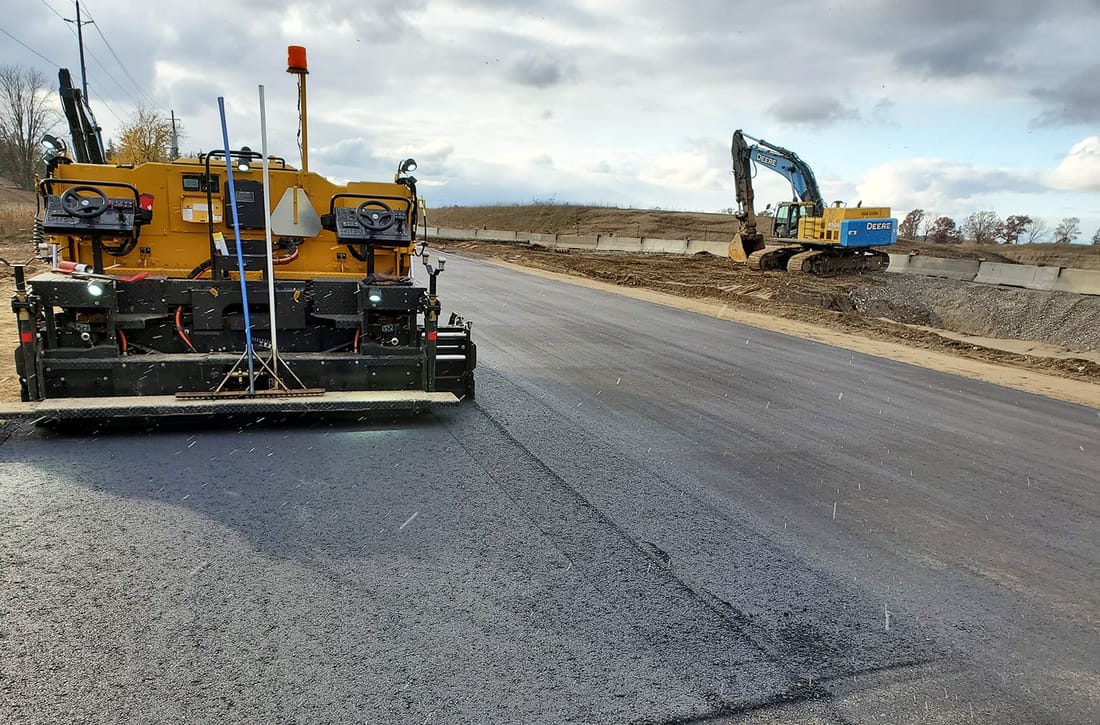
After grading, we compact using vibratory rollers suited to the layer being installed. For new construction, we typically place a granular base, then an asphalt base course, then a surface course. For rehab projects, we may mill 1.5 to 3 inches of existing asphalt, patch deeper failures, and install a new overlay. Our pavers use automatic screed controls to keep thickness and smoothness within spec, and we stagger joints to reduce future cracking.
Compaction is where long‑term performance is won or lost, so Precision Asphalt Detroit targets density levels specified by agencies, not just “looks good”. We use steel drum and pneumatic rollers in sequenced passes, adjusting rolling patterns based on temperature, mix design, and layer thickness so the mat is tight and uniform from centerline to gutter.
Material Options and Pavement Design for Detroit Conditions
The right asphalt mix and pavement structure depends on how your road is used and how Michigan weather affects it. For residential streets with car traffic only, we typically design a thinner asphalt section over a solid base. For bus routes, industrial streets, or roads with frequent heavy trucks, we specify thicker asphalt layers, stronger aggregate bases, and mixes formulated to handle higher loads without rutting.
Precision Asphalt Detroit works with local asphalt plants to use Superpave mixes that meet current MDOT and municipal standards. We can incorporate polymer‑modified binders for high‑stress intersections and bus stops, or use open‑graded friction courses where skid resistance and splash reduction are priorities. In Detroit alleys and tight streets that are hard to plow, we might recommend slightly coarser surface mixes for traction without creating excessive noise.
We also plan for Detroit’s freeze–thaw cycles. That often means designing adequate drainage, avoiding trapped water in the base, and using well‑graded aggregates that resist frost heave. For locations with chronic water issues, such as low spots near the river or older neighborhoods with clay soils, we may recommend underdrains, thicker base layers, or even full‑depth reclamation with cement or asphalt stabilization to stiffen the structure and control movement over time.
If your road must meet specific municipal or MDOT requirements, we design around those sections and prepare submittals that review layer thicknesses, mix types, and traffic assumptions so you can secure approvals more smoothly.
Scheduling Road Paving Around Detroit’s Climate and Traffic
Detroit’s paving season and traffic patterns strongly influence how we schedule your project. The best window for asphalt paving in this region is typically April through early November, with peak quality and efficiency usually in late spring and early fall. During hot midsummer days, surface temperatures can be high enough that we adjust work hours, shifting heavy compaction to cooler parts of the day so the mat does not shove or scuff.
For municipal and commercial roads, lane closures and detours are often the biggest concern for users. Precision Asphalt Detroit prepares traffic control plans that match local ordinances and MUTCD guidance. That may include phased construction (one lane at a time), night or weekend work near busy corridors, and coordinating access for schools, transit routes, and emergency services.
We also understand snow and ice control requirements. If your project is late in the year, we account for the time needed for the asphalt to cool and cure before plow operations begin. On roads where salt usage is heavy, we recommend detailing around joints, curb lines, and drainage structures to minimize the impact of repeated freeze–thaw and deicing chemicals on the pavement edges and subbase.
During planning, we walk you through a realistic timeline that includes utility adjustments, any needed base repairs, paving days, striping, and cure time before opening to full traffic. That schedule is matched to your operational needs so businesses, residents, or city services can prepare in advance.
Common Road Problems in Detroit and How We Fix Them
Local streets and municipal roads in Detroit tend to show a predictable set of failures, each with a different solution. Alligator cracking in wheel paths usually points to structural weakness. For those areas, simply overlaying the road will not last. Precision Asphalt Detroit removes the failed sections, repairs or replaces base material, then reinstalls asphalt in multiple lifts so the wheel paths can carry expected loads.
Potholes often form where water infiltrates through cracks, then freezes and expands. Our repair approach depends on the season. In winter, we may use high‑quality cold patch for temporary safety repairs, clearly identified as interim work. Once temperatures are suitable, we cut out the damaged area with straight edges, dry and clean the cavity, apply tack coat, then place and compact hot mix asphalt so the patch is structurally integrated, not just a plug.
Drainage‑related failures are common on aging Detroit streets, where settled gutters, sunken catch basins, or flattened cross slopes hold water. In those cases, we adjust structures to proper elevations, rebuild localized sections of curb and gutter, and correct cross slopes during milling and paving. Addressing drainage while the road is open avoids repeat failures in the same spots.
Rutting at bus stops or industrial access points usually indicates a need for stronger mixes or thicker sections. We may install a high‑modulus or polymer‑modified layer in those zones, even if the rest of the street uses standard asphalt. That targeted design keeps costs controlled while reinforcing the most heavily loaded areas.
What Drives Road Paving Costs and How We Control Them
Road paving budgets in Detroit are shaped by a few critical factors: existing pavement condition, required structural thickness, traffic control complexity, and site constraints. A straight overlay on a stable base with simple lane closures is comparatively economical. Full‑depth reconstruction with utilities, poor soils, and elaborate detours is more involved.
Precision Asphalt Detroit starts with a candid condition assessment. If we can extend the life of your street with milling and overlay or partial‑depth repairs, we will present that option alongside full reconstruction. We often propose alternate bid items, like varying asphalt thickness or base treatments, so municipalities and property owners can match scope to available funding.
Material selection also affects cost. Higher‑performance mixes and thicker sections cost more initially but can be justified on routes with heavy truck traffic or limited access for future repairs. For residential streets, we often design a cost‑efficient section that still meets expected service life by focusing on good drainage, solid base, and correct compaction rather than simply adding more asphalt.
Mobilization and phasing play a role too. Grouping multiple blocks or adjoining streets into a single project can reduce unit prices by spreading equipment and setup costs across more tonnage. When you involve us early in capital planning, we can help identify logical groupings, prioritize the worst segments, and phase work across budget years while still achieving uniform performance along each corridor.
Why Detroit Agencies and Property Owners Choose Precision Asphalt Detroit
For public roads, private streets, and shared municipal facilities, you need a paving partner that understands Detroit’s specific engineering and logistical challenges. Precision Asphalt Detroit combines field experience on local corridors with current knowledge of municipal and MDOT specifications, which means our recommendations are practical as well as compliant.
We manage projects from initial evaluation to final striping and punch lists. That includes coordinating with utility owners for valve and manhole adjustments, matching curb heights to ADA ramp requirements, and timing sign and marking installation so roads can be reopened safely and on schedule. Our crews are trained to work around residents, businesses, and public facilities with clear communication and professional traffic control.
Before any contract is signed, we will walk the alignment with you, discuss options for cross sections and phasing, and explain what you can expect during construction, from noise levels to driveway access plans. During the job, you will have a direct point of contact who can address concerns in real time. After completion, we review the project for smoothness, drainage, and joint quality, and we can set up a maintenance plan that includes crack sealing and periodic surface treatments to extend the life of your investment.
Whether you manage city streets, a campus road network, or private access roads that function like public streets, Precision Asphalt Detroit is prepared to deliver road paving work that holds up through Detroit winters, heavy traffic, and years of service.