Home › Speed Bumps, Curbs, and Asphalt Accessories
Control traffic and protect property with professional speed bump installation in Detroit, MI. We install asphalt speed humps, curbing, and parking lot accessories that guide drivers and define spaces. Ideal for apartments, schools, and busy commercial areas that need extra safety.
Precision Asphalt Detroit provides professional speed bump installation throughout Detroit, MI, Michigan and the surrounding area. Our licensed, insured crew delivers safe, clean, on-time work with a free estimate before anything begins. Call (313) 889-7046 or request your free quote.
Detroit-focused speed bump installation and traffic control solutions
If you manage a parking lot, private road, or residential community in Detroit, you already know how quickly traffic can get out of hand. Precision Asphalt Detroit designs and installs speed bumps, curbs, and related asphalt accessories that actually match how people drive on your property, not just what looks good on a drawing.
We start with a site visit. One of our project leads walks the property with you, looks at turning movements, any blind spots, school or pedestrian areas, and how snow plows access the site in winter. In Detroit, speed bump installation has to account for plow blades, freeze and thaw cycles, and drainage patterns, or the bump will crumble in a season or become a snow and ice trap.
Instead of guessing, we talk through problem spots you have seen. Are drivers cutting across parking bays. Are they racing down a side drive to avoid a light on Grand River, Gratiot, or 8 Mile. We combine your observations with our measurements, such as traffic flow and available sight distance, to recommend exact locations and proper spacing of speed bumps, curbing, and signage so drivers slow down where it matters most and not in front of every empty loading dock.
How our speed bumps, curbs, and asphalt accessories are actually built
Speed bump installation with Precision Asphalt Detroit follows a clear, predictable process so you know what is happening and why.
1. Layout and marking: We mark bump locations with paint, confirm they do not block ADA routes or fire lanes, and check with you on final placement. For curbs, wheel stops, and islands, we verify turning radiuses so delivery trucks and emergency vehicles can still maneuver.
2. Surface prep: For asphalt bumps on an existing lot, we clean the pavement with blowers and brooms, then cut shallow edges with a saw if needed so the new material ties into the old surface instead of just sitting on top. Any oil spots are treated so they do not bleed through and weaken the new asphalt.
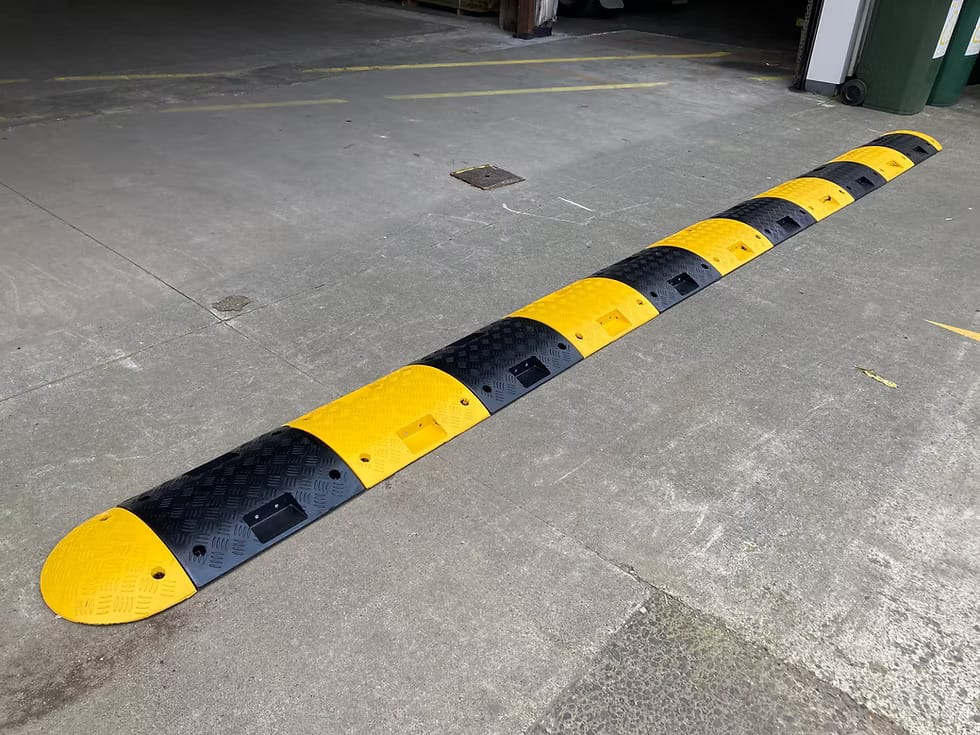
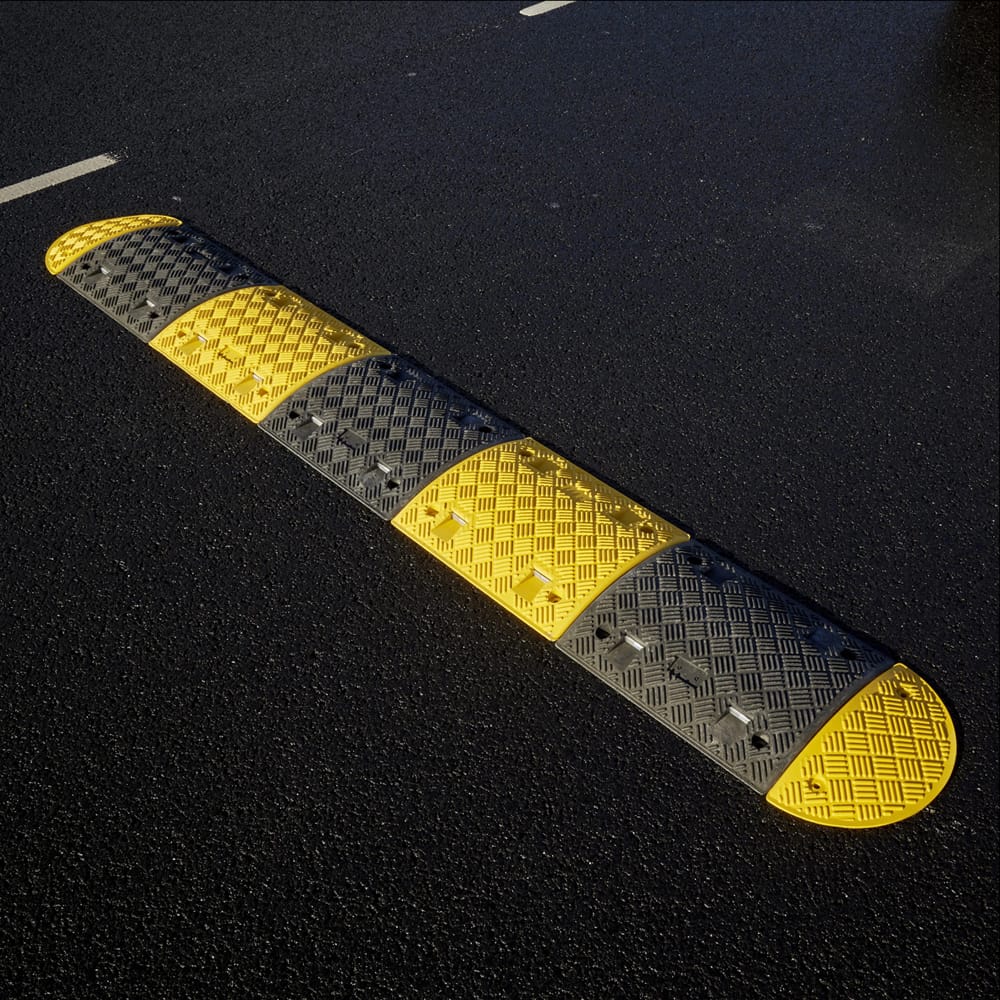
3. Material selection: For most Detroit parking lots, we use hot mix asphalt with a tighter aggregate blend so the bump compacts smoothly and stands up to plows and salt. In some cases, like industrial yards or where heavy semis are common, we will recommend concrete bumps or composite bolt-down units instead, especially where you may need to remove or adjust them later.
4. Installation and shaping: For asphalt speed bumps, we place material with shovels and rakes, then shape to a specific profile, usually 3 to 4 inches high with a gradual approach that does not bottom out low vehicles. We use hand tampers and plate compactors to lock the material in, then roll with a small roller if the layout allows. For curbs and accessories, we either pour concrete with steel reinforcement or drill and anchor pre-cast or recycled rubber pieces directly into the pavement.
5. Finishing, striping, and hardware: Once the material has cooled or cured enough to walk on, we apply traffic-grade reflective paint, usually bright yellow or white, and install any required signage, reflective buttons, or delineators. For bolt-down units, we use corrosion resistant anchors so Detroit winters do not seize the hardware in place.
The entire process, from layout to striping, often happens in a single day for small projects, which lets you reopen lanes and parking spaces quickly.
Design options and cost factors specific to Detroit properties
There is no single correct speed bump or curb for every Detroit property. Precision Asphalt Detroit walks you through real options so you get something that fits both your budget and how your site is used.
Height and profile choices: Residential communities and hospital lots often choose lower, wider speed humps that slow cars to around 15 to 20 mph without jarring passengers. Private drives near warehouses or alleys with chronic speeding might use shorter, steeper bumps that enforce 5 to 10 mph. The more aggressive the profile, the more care we take with placement and signage so drivers are not surprised.
Material options: Hot mix asphalt bumps are usually the most economical when we are already paving or resurfacing your lot. They blend in visually and hold up well if installed correctly. Pre-formed rubber or plastic units cost more per piece but install quickly, can be removed or relocated, and are useful where winter plowing is heavy or where you want a trial layout before committing to permanent asphalt or concrete. Concrete curbing costs more up front but is often the best choice where trucks ride along the curb or where de-icing chemicals are used heavily.
Climate and timing: In Michigan, temperature and moisture have a real impact on cost and schedule. Hot mix asphalt speed bumps need warm, relatively dry conditions to compact correctly. That is why most permanent bump and curb work is scheduled from late spring through early fall. In shoulder seasons or for urgent winter needs, we might recommend pre-formed bolt-down units or temporary calming devices until full asphalt work can be done.
Cost drivers: The number of bumps, the need for saw cutting, drainage adjustments, or patching existing failures significantly affects price. Adding curb islands or concrete work, or phasing work so parts of your lot stay open, also changes labor hours. During our estimate, we separate costs for each element (speed bumps, curbs, wheel stops, signage, striping) so you can prioritize what gives you the most safety improvement for your budget.
Common issues, maintenance, and how we prevent early failure
Speed bumps and curbs fail early when they are installed without attention to drainage, traffic patterns, or snow operations. Precision Asphalt Detroit has rebuilt plenty of failed installations, and we design new work to avoid the same problems.
Drainage and ponding: A bump that blocks water on a Detroit lot will quickly create a pothole right at the edges. Before we install, we look at how water currently drains, check nearby catch basins, and adjust layouts so water can move around or through cut channels if needed. Where a bump must cross a drainage path, we may recommend a speed hump profile instead of a sharp bump and include extra compaction at the edges.
Snow plows and winter damage: Plows can tear up poorly anchored or too-tall bumps and curbs. We talk with your snow contractor, mark bump locations clearly, and choose profiles that allow a plow blade to ride over instead of striking the leading edge. For rubber or plastic units, we set anchors flush and use heavy duty end caps to prevent peeling. For asphalt, we bevel the approaches and use high contrast paint so drivers and plow operators can see them even in low light.
Cracking and raveling: In our climate, freeze and thaw movement is constant. We reduce cracking by tying new asphalt into existing pavement with saw cut edges, using the right compaction equipment, and applying a sealant at joints when needed. If we see that the underlying pavement is already failing, we will recommend removing and replacing a pad under the bump instead of just placing new material over broken asphalt.
Maintenance plan: After installation, we recommend simple inspections each spring and fall. Look for chipped edges, faded striping, loose anchors, or curbs that have been hit. Most issues can be corrected quickly with small asphalt patches, repainting, or replacing a section of a modular system instead of tearing everything out. When we install, we note the products used so we can match colors and hardware on future repairs.
What to expect when you work with Precision Asphalt Detroit
We know you are balancing safety, liability, and keeping your property open for business. That is why Precision Asphalt Detroit treats speed bump installation and related work as a small project with big impact, not an afterthought.
Planning and communication: After the initial visit, you receive a clear layout drawing that shows each speed bump, curb run, or wheel stop, plus striping and signage locations. We schedule work to avoid peak traffic, coordinate with tenants or managers, and, if helpful, provide a short notice you can email or post for residents or employees.
Traffic control during work: On installation day, our crew sets cones, barricades, and directional signs to keep people away from fresh material. For busy sites, we can phase work so one entrance or drive lane remains open while we complete the other. We also plan truck movements carefully so we are not blocking key drive lanes longer than necessary.
Cure times and reopening: Asphalt bumps are usually ready for light vehicle traffic within a few hours, depending on temperature. Painted surfaces may need a bit more time to dry. For concrete curbs and islands, we typically recommend at least 24 hours before traffic and 72 hours before heavy truck loading. We walk the site with you after completion, review what was installed, and discuss any special instructions for your snow plow or maintenance team.
Local accountability: Because we work throughout Detroit and the surrounding Michigan communities, our reputation is tied to projects people drive over every day. If something is not performing the way you expected, you are not dealing with an out of town contractor. You are dealing with a local asphalt team that can come back, inspect, and recommend adjustments so your speed bumps, curbs, and accessories keep doing their job for years.